Our Story
The Person Behind the Universe
I have never been able to see something as useless.
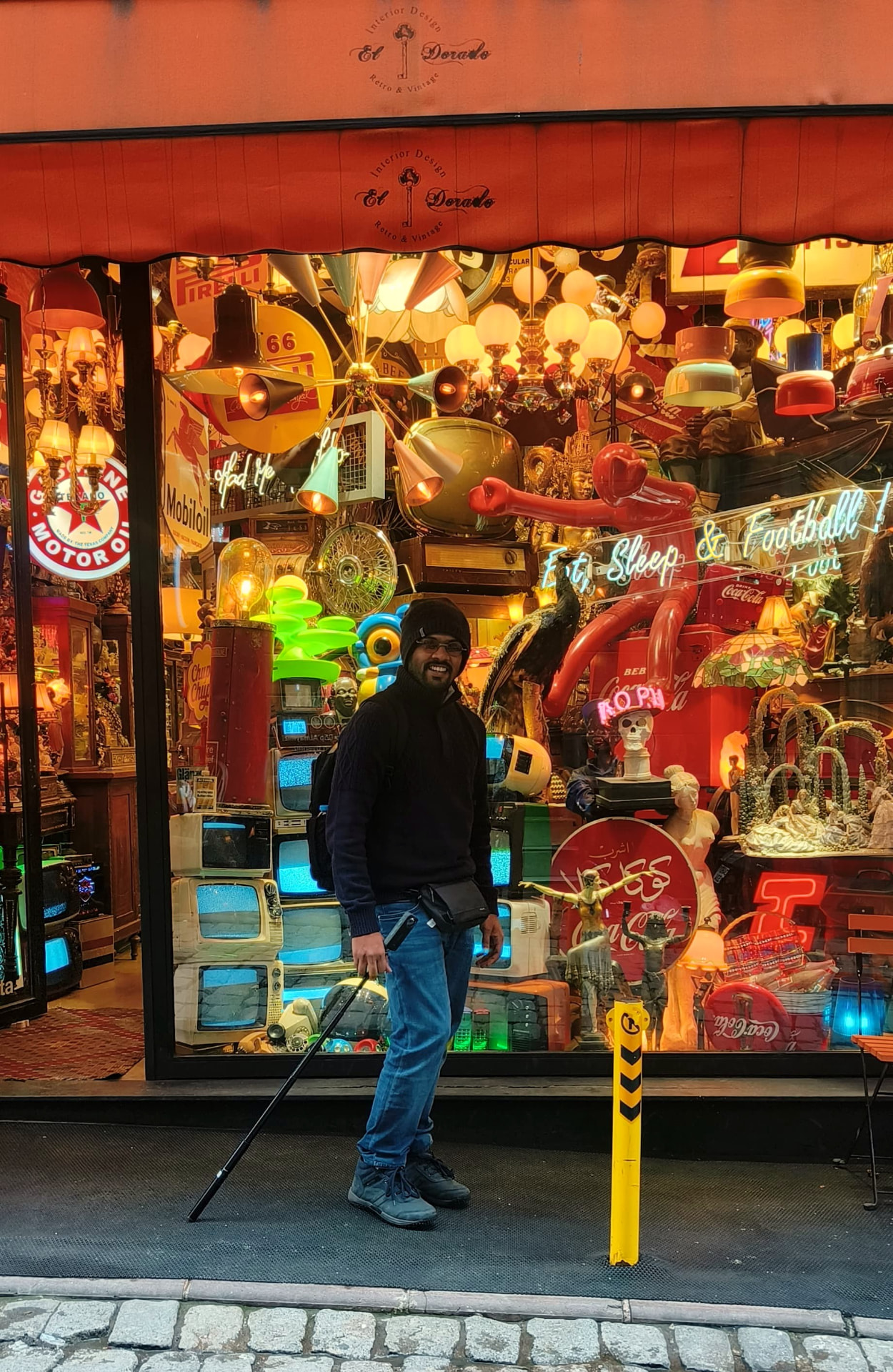
I'm Siva Ratna Swaroop Dasari. Most people call me Swaroop.
As a child, I never really asked for art supplies.
I made things from whatever was already around me. Broken pieces. Leftover parts. Things nobody needed anymore. Pieces left behind after something else had stopped working.
To everyone else, they were odds and ends.
Knick-knacks.
Forgotten things.
To me, they were possibilities.
I could pick up a piece of metal, a bit of wood, a wheel, a spring, or something whose original purpose I didn't even understand, and somehow imagine what else it could become.
It never felt like I was working with waste.
It felt like I was continuing a story.
Something had already been something once.
Maybe it could become something again.
And whenever that happened, whenever an overlooked object found another purpose in my hands, I felt an energy I could never quite explain.
I didn't have words for it then.
But I do now.
I believe almost everything around us carries possibility.
Objects carry history.
Materials carry memory.
Ideas carry futures that haven't happened yet.
And I believe people are the same.
We are born curious.
We touch things. Pull them apart. Put them together. Ask questions. Imagine impossible things without stopping to wonder whether any of it is practical.
Then, somewhere along the way, the world begins to tell us who we are supposed to become.
What we are good at.
What we are useful for.
What is realistic.
And what is not.
Slowly, some of that curiosity gets left behind.
Somehow, I never completely lost mine.
I kept collecting.
Making.
Taking things apart.
Bringing unrelated things together simply to see what might happen.
I never thought of it as a philosophy.
It was simply how I saw the world.
But over the years, that instinct began to turn into a question:
What if nothing is truly waste?
Not a material.
Not an idea.
Not a moment.
Not a person.
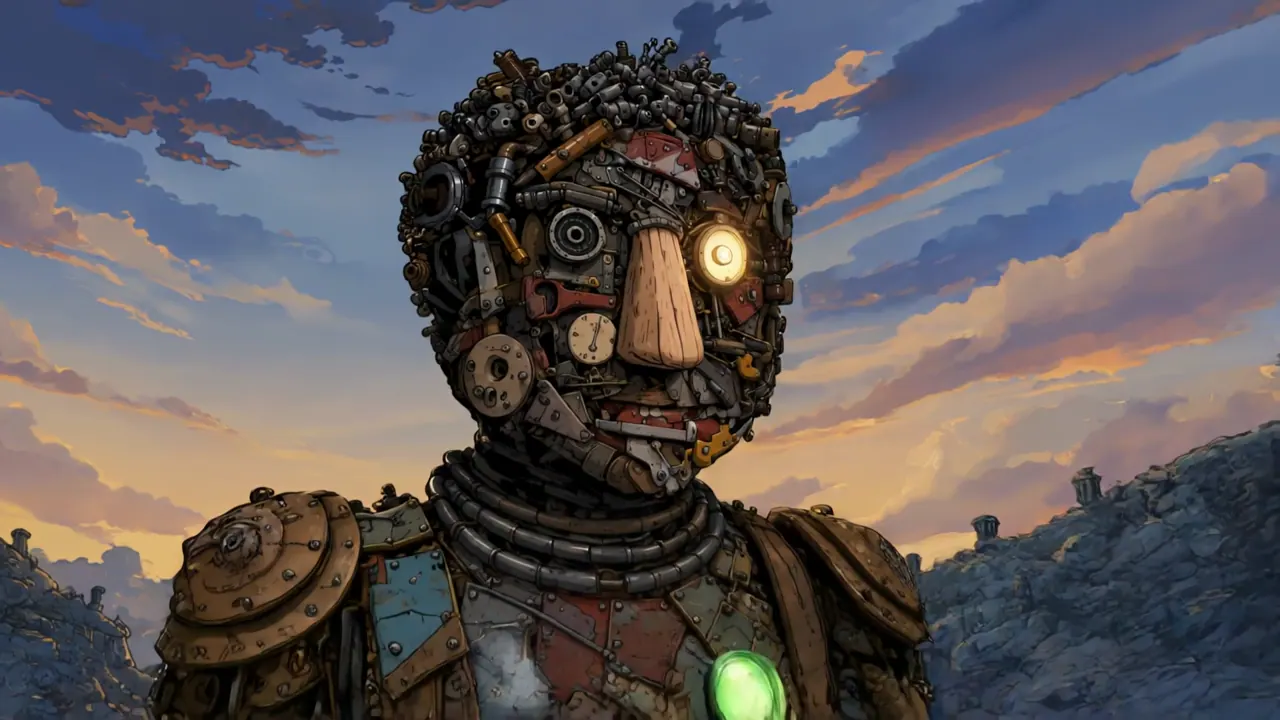
Years ago, that question became a face.
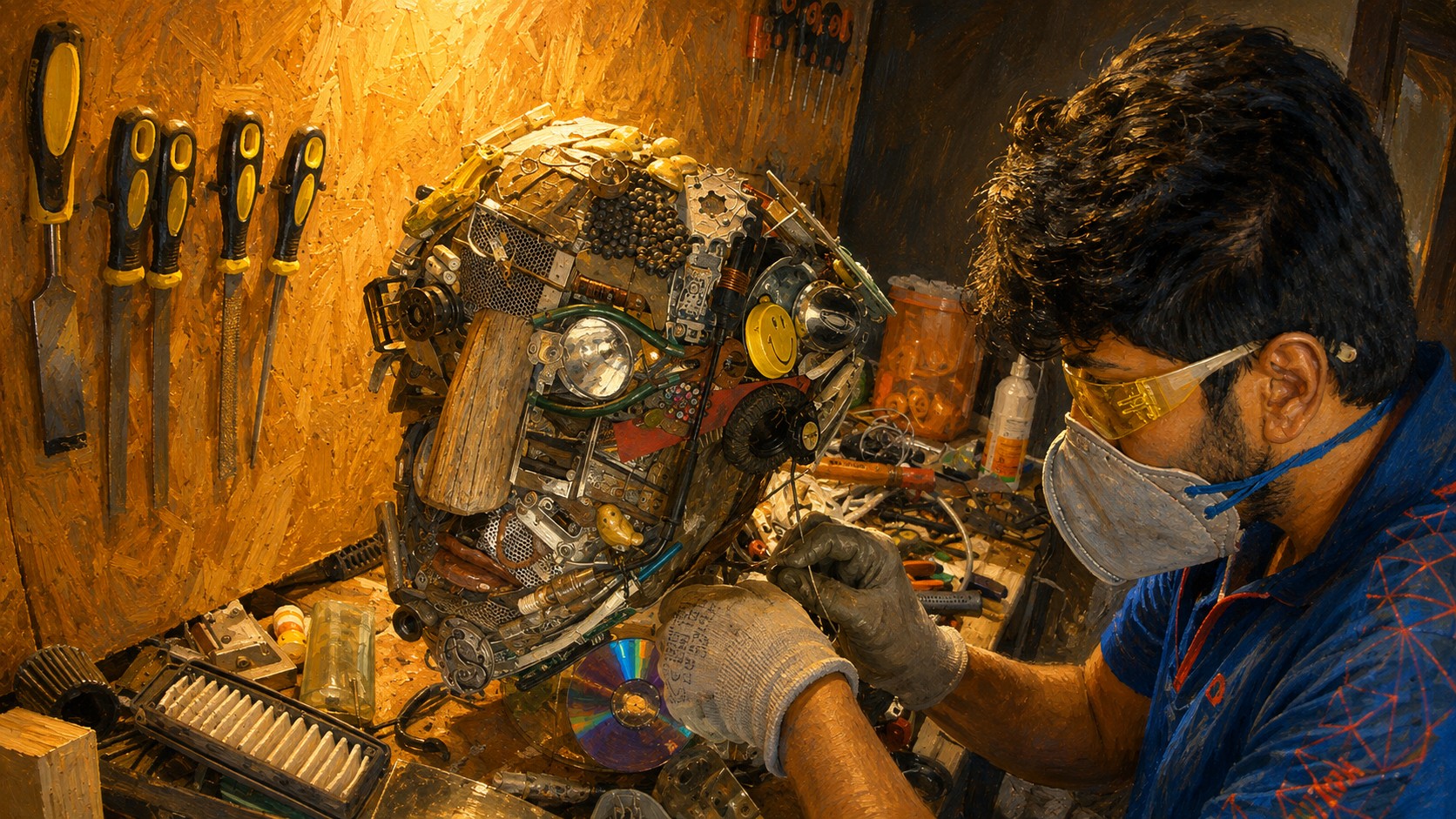
I was in my workshop, surrounded by the kinds of things I had always collected, when I started bringing different pieces together.
A piece of driftwood became a nose.
Old metal found a new purpose.
Parts that had once belonged to completely different things began fitting together as if they had been waiting to meet.
One eye watched the world.
The other seemed to dream about it.
His name was Knack.
And when I looked at him, I realised something strange had happened.
For the first time, my thoughts had a body.
But building Knack created another question.
Where had he come from?
What kind of world could create someone like him?
That question opened a universe.
A world shaped by the things we leave behind.
A world where forgotten objects may not really be finished.
Where nature, imagination, memory and possibility meet.
And where the end of one story may simply be the beginning of another.
From that world came Knick & Knack.
There is much more to their world than I want to explain here.
Some stories are better discovered slowly.
But creating them made me realise something about myself.
For a long time, I thought this belief belonged only to the things I made.
Then I began to understand that it was much bigger than that.
It was how I approached ideas.
Nature.
Technology.
Problems.
And people.
Knack gave that belief a face.
Knick & Knack gave it a world.
Ekonack gave me a way to put it into practice.
At first, they may look like very different things.
One begins with imagination, art and storytelling.
The other explores nature, technology, experimentation and real world problems.
But to me, they have never been separate.
They begin with the same question:
What could this become?
That question sits at the heart of Ekonack.
Technology interests me, but not simply because it is technology.
I am interested in what it can do.
Can it help us understand nature better?
Can it solve a problem differently?
Can it make something simpler?
Can it help an idea leave someone's imagination and begin working in the real world?
Can we take something that already exists and see a possibility in it that nobody noticed before?
That is the kind of thinking I want Ekonack to encourage.
And it is now becoming something I have wanted to build for a long time.
The Ekonack Innovation Hub.
I don't imagine it as a traditional classroom.
There is no single path everyone has to follow.
There is no fixed age at which curiosity begins or ends.
I want it to be a place where people can come with an idea, a question, or sometimes no idea at all, and simply begin.
A child experimenting with art.
Someone building something from discarded materials.
A student trying electronics for the first time.
An artist exploring technology.
An engineer learning from nature.
A creator arriving with nothing more than a strange thought and the desire to find out whether it can become real.
People from different ages and different backgrounds working beside one another.
Making.
Breaking.
Learning.
Trying again.
Helping each other.
Creating things that did not exist before.
Because that is how I learned.
Nobody handed me the perfect materials and told me exactly what to make.
I looked at what was around me and asked:
What could this become?
That question has followed me from the things I collected as a child, to the day Knack first stood in my workshop, to the universe that began growing around him, and now into everything we are building through Ekonack.
And perhaps that is what I want to pass on more than anything else.
Not simply the ability to make something.
But the habit of looking a little longer before deciding what something is capable of becoming.
An object.
An idea.
A problem.
A piece of technology.
A person.
Or even ourselves.
Because I still believe what I believed as a child, holding something the world had already forgotten:
Nothing is waste until we stop seeing what it could become.
— Swaroop Dasari
Founder, Ekonack